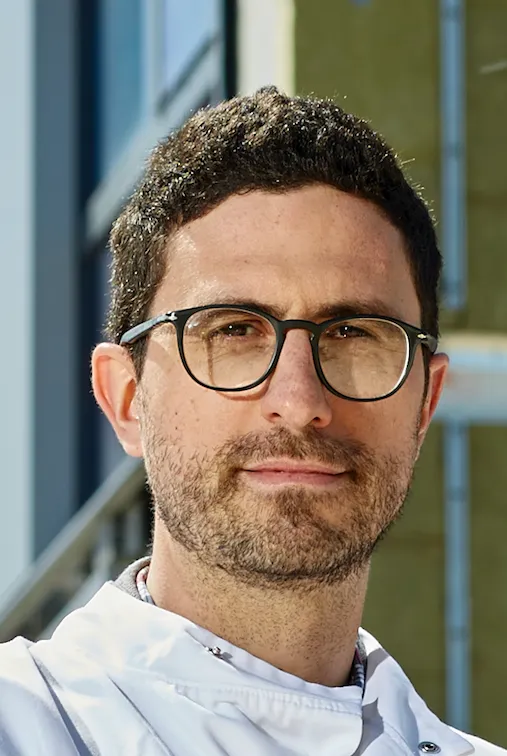
Andrea Sottoriva
Human Technopole
Biography
Andrea’s research focusses on the development of new computational approaches to measure cancer evolution in patients, with the aim of predicting the future course of the disease. Andrea’s lab also integrates patient-derived experimental models and multiomics data, with evolutionary methods to design new treatment strategies that aim at preventing and controlling drug resistance. After graduating in Computer Science from the University of Bologna in 2006, he obtained a master in Computational Sciences from the University of Amsterdam in 2008. During his studies, he worked in neutrino physics at the Department of Physics of the University of Bologna and at the Institute for Nuclear and High Energy Physics (NIKHEF) in the Netherlands as a research assistant. In 2012 he completed his PhD in Computational Biology from the University of Cambridge, where he worked at the Cancer Research UK research centre. After postdoctoral work at the University of Southern California, he started his lab at the Institute of Cancer Research in London in 2013, where in 2018 he became the Deputy Director of the Centre for Evolution and Cancer and then the Director in 2020. He moved to lead the Computational Biology Research Centre at Human Technopole in 2021.
Relevant Publications
- Negative Selection Maintains Grossly Altered but Broadly Stable Karyotypes in Metastatic Colorectal CancerCross W.C.H., Nowinski S., Cresswell G.D., Mossner M., Banerjee A., Lu B., et al., Sottoriva A.*, Graham T.A.*, (* joint corresponding authors), Cancer Discovery (2026).
- Tumor evolution metrics predict recurrence beyond 10 years in locally advanced prostate cancerFernandez-Mateos J., Cresswell G.D., Trahearn N., et al., Dearnaley D.*, Sottoriva A.*, (* joint corresponding authors), Nature Cancer (2024).
- The genomic landscape of 2,023 colorectal cancersCornish A.J., et al., Quirke P.*, Church D.N.*, Tomlinson I.P.M.*, Sottoriva A.*, Graham T.A.*, Wedge D.C.*, Houlston R.S.*, (* joint corresponding authors), Nature (2024).
- The co-evolution of the genome and epigenome in colorectal cancerHeide T., Househam J., et al., Graham T.A.*, Sottoriva A.*, (* joint corresponding authors), Nature (2022).
- Phenotypic plasticity and genetic control in colorectal cancer evolutionHouseham J., Heide T., et al., Sottoriva A.*, Graham T.A.*, (* joint corresponding authors), Nature (2022).
- Subclonal reconstruction of tumors using machine learning and population geneticsCaravagna G., Heide T., Williams M.J., Zapata L., Nichol D., Chkhaidze K., Cross W., Cresswell G.D., Werner B., Acar A., Chesler L., Barnes C.P., Sanguinetti G., Graham T.A., Sottoriva A., Nature Genetics (2020).
- Quantification of subclonal selection in cancer from bulk sequencing dataWilliams M.J., Werner B., Heide T., Curtis C., Barnes C.P., Sottoriva A.*, Graham T.A.*, (* joint corresponding authors), Nature Genetics (2018).
- Patient-derived organoids model treatment response of metastatic gastrointestinal cancersVlachogiannis G., Hedayat S., Vatsiou A., Jamin Y., Fernandez-Mateos J., Khan K., Lampis A., Eason K., Huntingford I., Burke R., Rata M., Koh D.M., Tunariu N., Collins D., Hulkki-Wilson S., Ragulan C., Spiteri I., Moorcraft S.Y., Chau I., Rao S., Watkins D., Fotiadis N., Bali M., Darvish-Damavandi M., Lote H., Eltahir Z., Smyth E.C., Begum R., Clarke P.A., Hahne J.C., Dowsett M., de Bono J., Workman P., Sadanandam A., Fassan M., Sansom O.J., Eccles S., Starling N., Braconi C., Sottoriva A., Robinson S.P., Cunningham D., Valeri N., Science (2018).
- Identification of neutral tumor evolution across cancer typesWilliams M.J., Werner B., Barnes C.P., Graham T.A., Sottoriva A., Nature Genetics (2016).
- A Big Bang model of human colorectal tumor growthSottoriva A., Kang H., Ma Z., Graham T.A., Salomon M., Zhao J., Marjoram P., Siegmund K., Press M.F., Shibata D., Curtis C., Nature Genetics (2015).